
How to Stop Overthinking and Calm Your Mind
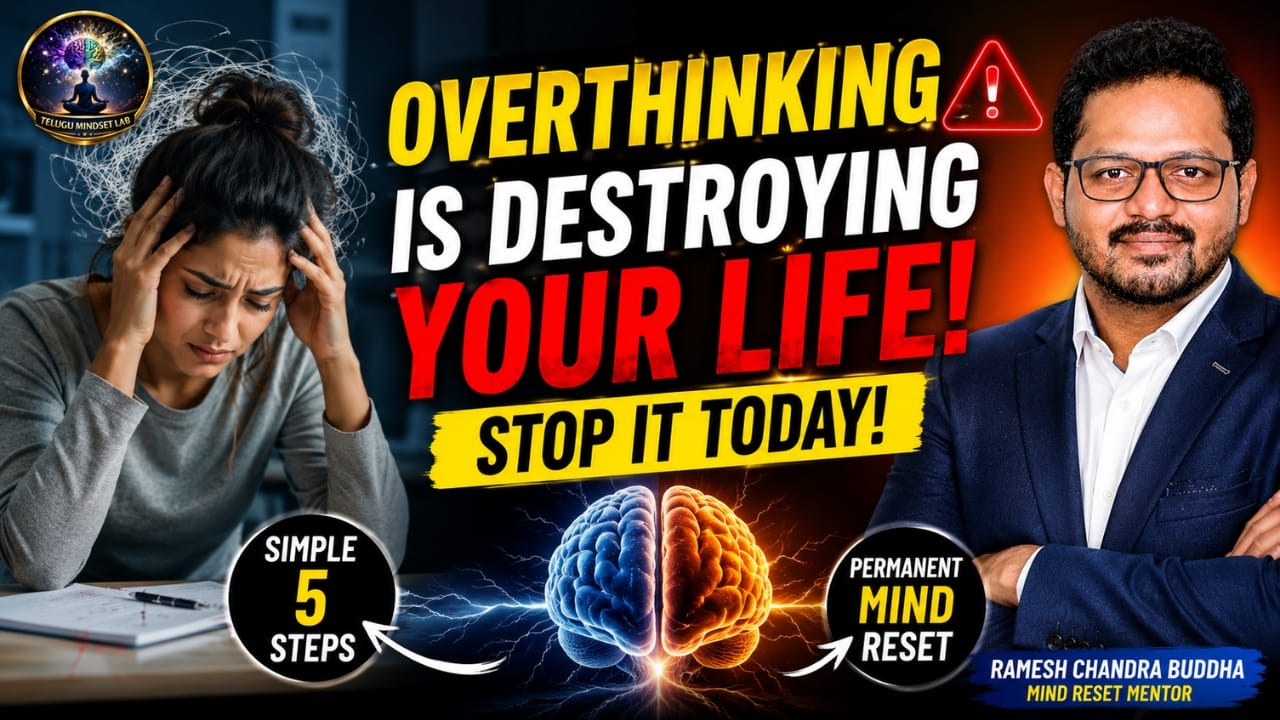
How to Stop Overthinking Permanently
Overthinking looks harmless from the outside.
After all, you are “just thinking.”
However, deep inside, it slowly steals your peace, confidence, sleep, clarity, and energy.
One thought becomes ten thoughts.
Then, suddenly, your mind creates an entire disaster movie.
Meanwhile, nothing has even happened in reality.
If you searched for “how to stop overthinking permanently,” chances are you are mentally exhausted.
Maybe your mind never stops.
Maybe you replay conversations repeatedly.
Perhaps you overanalyze every small decision.
Or maybe your brain creates fear even before life creates problems.
First of all, let me tell you something important.
You are not weak.
You are not broken.
And most importantly, you are not alone.
Today, millions of people silently struggle with anxiety, stress, negative thoughts, emotional overload, and overthinking.
Unfortunately, most people try to solve overthinking using motivation.
However, motivation rarely calms an overloaded nervous system.
That is exactly why this article exists.
In this article, I will explain:
Why overthinking happens
Why your mind never stops thinking
How anxiety fuels overthinking
The psychology behind repetitive thoughts
How your nervous system affects your thinking
Practical ways to stop overthinking naturally
Emotional reset techniques that actually help
How to build a calm and clear mind permanently
Most importantly, I will speak to you like a real human being.
Not like a robotic self-help article.
So, let us begin.
What Is Overthinking Really?
Most people misunderstand overthinking.
They think overthinking means:
“Thinking too much.”
However, that is not entirely true.
Overthinking is actually:
Repetitive emotional thinking without resolution.
Your mind keeps circling around the same fear, possibility, regret, or uncertainty.
Meanwhile, your nervous system stays alert.
Therefore, your brain keeps searching for danger.
As a result, thoughts multiply.
That is why overthinking feels exhausting.
Your brain is trying to protect you.
Unfortunately, it starts protecting you from imaginary threats too.
Consequently:
You replay conversations
You fear future situations
You imagine worst-case scenarios
You overanalyze people’s opinions
You doubt yourself repeatedly
Eventually, your mind becomes noisy.
Then, even small decisions start feeling heavy.
Why Your Mind Never Stops Thinking
One of the biggest questions people ask is:
“Why can’t I stop thinking?”
The answer is surprisingly simple.
Your brain is designed for survival.
Not peace.
Thousands of years ago, humans survived by constantly scanning for danger.
Therefore, the brain evolved to notice problems faster than peace.
Today, however, the danger is different.
Instead of wild animals, your brain reacts to:
Social pressure
Failure fear
Relationship anxiety
Career uncertainty
Financial stress
Emotional pain
Future worries
Unfortunately, your brain cannot always differentiate between a real threat and an imagined threat.
As a result, your nervous system reacts the same way.
Therefore:
Your body becomes tense.
Your breathing changes.
Your thoughts speed up.
And your mind refuses to calm down.
That is why simply saying:
“Stop thinking.”
rarely works.
It is like telling a fire alarm to relax while smoke still exists.
Overthinking and Anxiety Are Deeply Connected
Overthinking and anxiety are cousins.
In fact, they feed each other constantly.
An anxious mind creates overthinking.
Then, overthinking creates more anxiety.
Consequently, you become trapped inside a mental loop.
For example:
You send a message.
The other person does not reply.
Immediately, your brain starts creating stories.
“Did I say something wrong?”
“Are they angry?”
“What if they hate me?”
Meanwhile, reality might be extremely simple.
Maybe they are busy.
However, your nervous system already entered survival mode.
Therefore, logic disappears.
And emotional thinking takes over.
This is why overthinking feels real.
Your body believes the fear.
The Hidden Reason Behind Overthinking
Most people think overthinking is an intelligence problem.
Actually, it is often an emotional safety problem.
Let me explain.
Your brain overthinks because it wants certainty.
It believes:
“If I think enough, I can avoid pain.”
Therefore, your mind keeps analyzing.
However, life does not offer complete certainty.
That is where suffering begins.
You try to mentally control things that are emotionally uncomfortable.
Consequently:
You keep replaying situations
You search for perfect answers
You delay decisions
You fear mistakes
Eventually, mental exhaustion arrives.
Then, even simple life starts feeling heavy.
Why Smart People Often Overthink More
This might surprise you.
Many intelligent people struggle with overthinking.
Why?
Because intelligence increases possibilities.
Your brain can imagine multiple outcomes quickly.
That sounds useful.
However, without emotional regulation, intelligence becomes mental chaos.
Your brain keeps asking:
“What if?”
Again.
And again.
And again.
Soon, you become trapped inside endless analysis.
Meanwhile, action disappears.
This is exactly why many smart people feel stuck in life.
Not because they lack potential.
But because their nervous system is overloaded.
Overthinking Slowly Destroys Confidence
Most people think confidence disappears first.
Actually, overthinking often destroys confidence slowly.
Here is how.
First, your brain creates fear.
Then, you delay action.
Then, you start doubting yourself.
Consequently, your self-trust weakens.
Eventually, even small tasks start feeling intimidating.
This is why many people say:
“I know what to do. But I still can’t do it.”
The problem is not laziness.
The problem is emotional overload.
Why Motivation Does Not Stop Overthinking
Many people consume motivation daily.
However, the mind still feels restless.
Why?
Because motivation temporarily excites the mind.
But it does not regulate the nervous system.
That is why motivation feels powerful at night.
Then disappears by morning.
Meanwhile, unresolved emotional stress remains inside the body.
Therefore, your thoughts return.
Real calmness comes from regulation.
Not excitement.
That is a huge difference.
The Nervous System Connection Nobody Talks About
This is extremely important.
Overthinking is not only happening in your mind.
It is also happening in your body.
When stress increases, your nervous system enters fight-or-flight mode.
Consequently:
Heartbeat increases
Muscles tighten
Thoughts accelerate
Emotional sensitivity increases
Then, your brain starts searching for danger everywhere.
That is why even small issues feel huge.
Your body is overloaded.
Therefore, your thinking becomes distorted.
This is also why calming the body helps calm the mind.
The connection is real.
How to Stop Overthinking Permanently
Now let us move toward practical solutions.
Not temporary motivation.
Not fake positivity.
Real emotional and mental reset systems.
Stop Trying to Control Every Thought
First of all, stop fighting every thought.
Seriously.
Many people create additional stress by trying to “force” positive thinking.
However, the harder you fight thoughts, the louder they become.
Instead, observe them.
A thought is not automatically reality.
A fearful thought does not predict the future.
A negative thought does not define your identity.
Sometimes, your brain is simply stressed.
That is all.
Therefore, instead of reacting immediately, pause.
Observe.
Breathe.
This small shift changes everything.
Calm the Body First
Most people try to calm the mind directly.
However, calming the body often works faster.
Why?
Because your nervous system influences your thoughts.
Therefore, when the body relaxes:
Thoughts slow down
Emotional intensity decreases
Clarity improves
This is exactly why practices like:
Deep breathing
EFT tapping
Meditation
Grounding
Slow walks
help reduce overthinking.
You are not “escaping.”
You are regulating.
That is healthy.
EFT Tapping for Overthinking
One of the most practical tools for emotional regulation is EFT tapping.
EFT stands for Emotional Freedom Technique.
It combines gentle tapping on specific body points with emotional acknowledgment.
Unlike fake affirmations, EFT allows emotional honesty.
For example:
“Even though my mind feels overwhelmed… I can slowly calm down.”
This matters.
Because your nervous system feels acknowledged.
Consequently, emotional intensity starts decreasing.
Many people report feeling calmer, lighter, and clearer after guided EFT sessions.
Most importantly, EFT helps interrupt emotional loops.
That is powerful for overthinking.
Your Environment Affects Your Thoughts
This is another hidden truth.
Your environment constantly influences your emotional state.
For example:
Excessive social media increases comparison
Negative people increase stress
Chaotic surroundings increase mental noise
Lack of sleep increases anxiety
Consequently, overthinking worsens.
Therefore, protecting your mental environment is essential.
Sometimes, peace is not about adding more.
It is about reducing unnecessary noise.
Sleep and Overthinking Are Deeply Connected
A tired brain overthinks more.
This is extremely common.
When sleep quality decreases:
Emotional regulation weakens
Anxiety increases
Stress tolerance decreases
Thoughts become heavier
Then, nighttime becomes difficult.
Ironically, the more you force sleep, the harder it becomes.
Therefore, instead of forcing sleep:
focus on calming the nervous system.
Slow breathing.
Relaxed lighting.
Gentle EFT.
Less screen exposure.
Gradually, the body starts feeling safe again.
Then sleep improves naturally.
Why Social Media Increases Overthinking
Social media constantly overstimulates the brain.
Your nervous system rarely gets rest.
Meanwhile, comparison increases silently.
You see:
Other people’s success
Relationships
achievements
beauty
confidence
Consequently, your brain starts questioning itself.
Then:
self-doubt increases.
Fear increases.
Overthinking increases.
This is why digital boundaries matter.
Peaceful minds protect their attention.
The Dangerous Habit of Replaying Conversations
Many overthinkers replay conversations repeatedly.
You say something.
Then later:
“Why did I say that?”
“Did I sound weird?”
“They probably judged me.”
However, most people are too busy thinking about themselves.
Not you.
This realization alone can reduce huge emotional pressure.
Furthermore, perfection in communication does not exist.
You are human.
Not a robot.
Fear of Judgment Creates Mental Prison
A huge percentage of overthinking comes from people’s opinions.
Many people silently live for external approval.
Therefore:
They overanalyze behavior
They fear embarrassment
They avoid action
They suppress authenticity
Eventually, mental exhaustion develops.
Here is the truth.
No matter what you do:
some people will misunderstand you.
That is normal.
Trying to control everyone’s perception is impossible.
Real freedom begins when self-respect becomes stronger than external validation.
Action Reduces Overthinking Faster Than Endless Thinking
This is critical.
Overthinking loves inactivity.
The longer you stay mentally trapped, the bigger fear becomes.
However, action interrupts mental loops.
Even tiny action matters.
Not perfect action.
Tiny action.
For example:
One phone call
One workout
One application
One conversation
One step
Small movement creates psychological momentum.
Then, confidence slowly returns.
Remember this:
Clarity often comes after action.
Not before it.
Your Mind Needs Safety, Not Pressure
Many people constantly pressure themselves.
“Be productive.”
“Be successful.”
“Fix your life immediately.”
Unfortunately, constant internal pressure creates more anxiety.
Consequently, overthinking increases.
Instead, your nervous system needs moments of safety.
Moments where you are not fighting yourself.
This is why self-compassion matters.
Not self-pity.
Self-compassion.
There is a difference.
The Truth About Permanent Peace
Many people ask:
“How do I stop overthinking permanently?”
Let me answer honestly.
You may still have thoughts sometimes.
You are human.
However, permanent peace does not mean:
“Never thinking negatively again.”
Permanent peace means:
Thoughts no longer control your emotional state completely.
That is real emotional strength.
You learn to:
observe thoughts
regulate emotions
calm the nervous system
return to clarity faster
That changes life deeply.
Build Daily Mind Reset Habits
Consistency matters more than intensity.
Therefore, create simple reset habits.
For example:
Morning
Avoid immediate phone scrolling
Take slow breaths
Set emotional intention
Midday
Pause for nervous system reset
Step outside briefly
Stretch or walk slowly
Night
Reduce stimulation
Practice calming EFT
Journal thoughts briefly
Slow the body before sleep
Small systems create massive emotional stability over time.
Stop Waiting to Feel Perfect
Many people delay life until they “feel ready.”
Unfortunately, readiness rarely arrives magically.
Overthinking keeps searching for perfect certainty.
However, life moves through imperfect action.
You do not need complete confidence before starting.
You need willingness.
That is enough.
Healing Is More Important Than Hustle
Modern culture glorifies constant hustle.
However, emotionally exhausted people cannot sustain peace through pressure.
That is why many successful people still feel internally restless.
They achieved externally.
But never emotionally regulated themselves.
Real success includes:
calmness
emotional clarity
inner stability
meaningful relationships
peaceful productivity
Without inner peace, external success feels incomplete.
You Are Not Your Thoughts
This may be the most important realization in this entire article.
You are not every thought your brain creates.
Thoughts are mental events.
Not identity.
Sometimes, your brain produces fear because your nervous system feels unsafe.
That does not mean your future is doomed.
Sometimes, your mind creates worst-case scenarios because it wants protection.
That does not mean disaster is coming.
Understanding this changes everything.
The Goal Is Not a Silent Mind
Many people believe peace means:
“No thoughts at all.”
That is unrealistic.
The goal is not a perfectly silent mind.
The goal is:
A mind that no longer terrifies you.
A calmer relationship with your thoughts.
A stronger emotional foundation.
A nervous system that feels safer.
That is real transformation.
Final Thoughts on How to Stop Overthinking Permanently
If you remember only one thing from this article, remember this:
Overthinking is not simply a thinking problem.
It is often an emotional and nervous system overload problem.
Therefore, healing requires more than motivation.
It requires:
awareness
emotional regulation
nervous system calmness
practical systems
consistent reset practices
Most importantly, stop attacking yourself for struggling.
Your mind is trying to protect you.
Now, you simply need to teach it safety again.
Slowly.
Patiently.
Consistently.
And yes — peace is possible.
Not fake positivity.
Not forced motivation.
Real peace.
One calm moment at a time.
About the Author
Ramesh Chandra Buddha is a Telugu Mindset Coach and Mind Reset Mentor helping Telugu-speaking people overcome stress, anxiety, overthinking, and emotional exhaustion through practical mindset systems, EFT-based techniques, emotional healing practices, and nervous system awareness.
RESET. REALIGN. RISE.
Sometimes, life does not need more pressure.
Sometimes, it simply needs a calmer mind.

Hi, I'm Ramesh Chandra Buddha
a Mind Reset Mentor and Certified EFT Master Practitioner. My goal with the Telugu Mindset Lab is simple: to give you practical, science-backed tools to reset your mindset and build lasting clarity. You won't find any hype or fake motivation here—just proven, real-world strategies designed to help you take control of your mental well-being.


JOIN MY MAILING LIST
Telugu Mindset Lab empowers you to reset your mind, rewire your beliefs, and rise to your highest potential. Through EFT, mindset coaching, and practical tools, we help you break limitations and create lasting transformation. Your growth journey starts here—take action, stay consistent, and become the best version of yourself.
Phone: +91 9177673414
Newsletter
Subscribe now to get daily updates.
Created with © systeme.io